
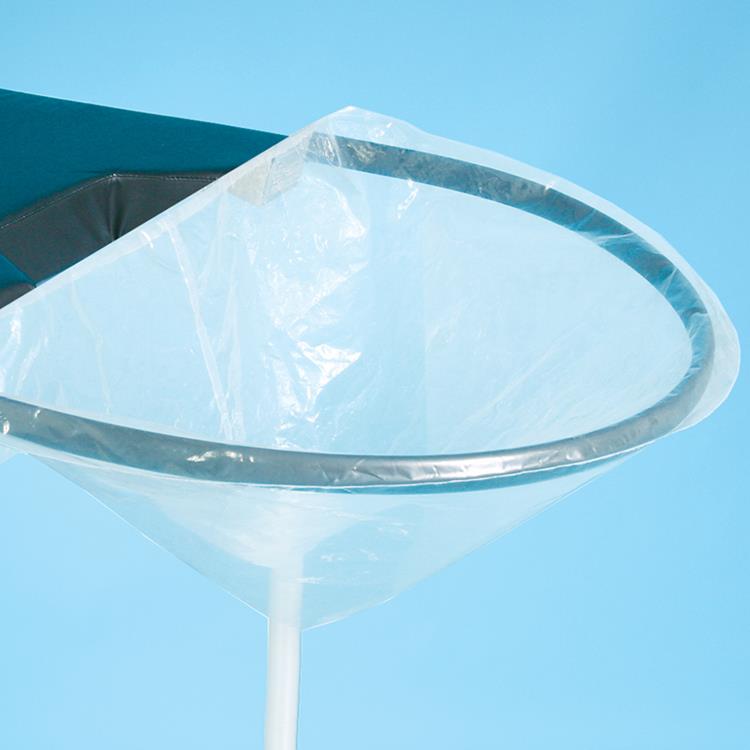
A Uro-Trapper System is used to contain, collect, and direct fluids generated during urologic and related surgical procedures while helping preserve access to the operative site. At SchureMed, our Uro-Trapper System is designed for procedures including cystoscopy, hysteroscopy, urologic surgery, and oncologic surgery. The system mounts to a general operating room table, supports a disposable drainage bag, and helps move surgical fluid away from the procedural area without compromising patient positioning or unnecessarily restricting surgeon access.
Fluid management can become a significant logistical concern whenever a procedure involves irrigation, lavage, or other sources of substantial fluid. Rather than treating that fluid as an incidental part of the case, a purpose-built containment system gives the surgical team a defined pathway for collection and drainage.
For urology teams, that means the Uro-Trapper can become an important component of an efficient OR setup, particularly when it is integrated with the surgical table, patient-positioning equipment, suction resources, and sterile procedural workflow.
What Is a Uro-Trapper System Used For?
The primary function of a Uro-Trapper System is surgical fluid containment and drainage.
During procedures such as cystoscopy and other urologic interventions, irrigation fluid may be used to support visualization, flush the operative area, or facilitate procedural techniques. That fluid eventually has to go somewhere. Without an effective containment strategy, fluid can collect around the patient, drapes, table, and surrounding floor area.
Our Uro-Trapper System creates a dedicated collection area below the surgical site. It supports a drainage bag positioned to receive fluids as they leave the procedural field.
SchureMed specifies the Uro-Trapper for fluid containment during:
- Cystoscopy
- Hysteroscopy
- Urologic surgical procedures
- Oncologic surgical procedures
The system uses flexible drape support so that fluid containment does not require placing a rigid obstruction directly in the surgeon’s working area. If the flexible support is compressed during the procedure, it is engineered to spring back into position to help restore effective fluid drainage.
That combination of containment, drainage, flexibility, and table compatibility distinguishes a purpose-designed Uro-Trapper System from improvised fluid-management arrangements.
Why Fluid Management Matters in Urologic Surgery
Fluid is an expected part of many urologic procedures, particularly endoscopic cases in which irrigation contributes to visualization and procedural efficiency.
The challenge is not simply collecting fluid. The OR team must manage that fluid without creating unnecessary interference with the procedure.
An effective fluid-management setup can help the surgical team maintain a more controlled working environment by giving irrigation and other fluids a predictable drainage pathway. It can also reduce the amount of fluid that needs to be managed through absorbent materials or other less-direct containment methods around the surgical table.
Important considerations include:
- Positioning the collection area where gravity can support drainage
- Keeping drainage components appropriately situated throughout the procedure
- Avoiding unnecessary obstruction around the surgeon’s working position
- Maintaining compatibility with suction and fluid-measurement workflows when required
- Preventing drain tubing from interfering with other equipment
- Making sure containment equipment remains securely connected to the OR table
SchureMed’s Uro-Trapper drain bags incorporate an open-mesh filter designed to support rapid drainage. The associated flexible hose is compatible with suction systems and can therefore support fluid-management workflows in which collected fluid needs to be directed away from the operative area.
Supporting Fluid Collection Without Compromising Surgical Access
Any device positioned near the operative field must balance functionality against access.
A fluid-containment product would provide limited value if it successfully captured fluid but made the procedure more difficult to perform. That is why we designed the Uro-Trapper System around a flexible support structure.
The flexible drape support is intended to provide unobstructed surgeon access to the surgical site. During a case, the surgeon may lean against or otherwise compress the support. Rather than remaining collapsed, the support is designed to return to its functional position afterward, helping the drainage area remain appropriately configured.
This is particularly important in urologic procedures where clinicians may need close access to the patient while working between the patient’s legs or around the lower portion of the operating table.
A surgical accessory should support the procedure rather than dictate how the team must work around it.
Uro-Trapper Systems and the Sterile Field
Sterile-field considerations must be incorporated into the OR setup before a procedure begins.
The Uro-Trapper itself functions as the reusable support for the fluid-containment arrangement, while SchureMed offers disposable drain bags for the system, including a sterile drain bag option.
This allows facilities to select the drainage accessory appropriate to their procedural protocols.
When preparing the room, the surgical team should consider where the Uro-Trapper will sit in relation to:
- Sterile surgical drapes
- The patient
- Surgical stirrups or leg supports
- Suction tubing
- Fluid collection equipment
- The surgeon and assistants
- Other rail-mounted accessories
- Cords, hoses, and equipment positioned near the foot of the table
Thoughtful equipment placement is critical because numerous devices may share the limited space around an operating table.
Our broader range of operating room accessories is developed around the same need for controlled integration within contemporary surgical environments. OR accessories may need to coexist on side rails with positioning components, supports, clamps, restraints, and other equipment without creating an unnecessarily complicated setup.
Sterile setup and use should always follow the facility’s protocols, applicable product instructions for use, and the clinical team’s established practices.
Compatibility With Standard Operating Room Setups
One of the practical advantages of the Uro-Trapper System is that it does not require a specialized urologic procedure table.
SchureMed designs the system to attach to a general surgical OR table using its integrated mounting clamps.
That compatibility can be especially valuable for hospitals and surgery centers seeking to increase the versatility of existing operating tables rather than maintaining a completely separate table configuration for every procedural specialty.
The Uro-Trapper can become one component of a larger urologic positioning setup that may also incorporate:
- Lithotomy stirrups
- Knee crutches
- Patient restraints
- Surgical table clamps
- Rail-mounted positioning accessories
- Suction equipment
- Fluid-management equipment
The specific configuration depends on the procedure, patient, surgical table, clinical preferences, and other equipment required for the case.
Secure mounting is especially important when multiple accessories are being placed along surgical table rails. SchureMed’s broader OR equipment portfolio reflects the importance of reliable rail attachment and compatibility across surgical setups. For example, our OR clamp technologies are engineered to secure various positioning accessories to surgical table rails, including solutions intended for flexible mounting around different table configurations.
Before a procedure, the team should verify that every component is securely mounted and positioned appropriately and that fluid-management equipment does not interfere with the patient’s positioning system.
How the Uro-Trapper Drainage System Works
The concept is straightforward: create a supported fluid-containment area below the procedural site and give collected liquid a controlled route away from the patient and surgical table.
The Uro-Trapper frame mounts to the operating table and supports the drain bag. The bag creates the containment area while its drainage components provide a route for fluid removal. The product’s flexible support helps maintain the shape and accessibility of the collection area.
SchureMed offers Uro-Trapper Drain Bags designed specifically for use with the system. The bags feature an open mesh filter to facilitate rapid drainage, and the flexible drainage hose is compatible with suction systems.
From an OR workflow perspective, this arrangement provides several practical functions simultaneously:
- Containment: Fluid leaving the procedural area has a designated collection space.
- Drainage: Collected fluid can move away from the operative site.
- Access: The flexible support helps keep the containment system from becoming a rigid barrier between the surgeon and patient.
- Integration: Table-mounted construction allows the system to become part of the surgical setup instead of requiring separate floor-standing support equipment.
That simplicity is valuable in an environment where every added piece of equipment can affect setup time, working space, and procedural flow.
Integrating a Uro-Trapper With Lithotomy Positioning
Many urologic procedures require access to the perineal region, often with the patient positioned using stirrups or another leg-support system.
In these cases, fluid management and patient positioning should be considered together rather than as separate setup tasks.
The team needs adequate space for the Uro-Trapper while also maintaining appropriate leg positioning, surgical exposure, equipment clearance, and access for clinicians.
SchureMed’s surgical positioning portfolio includes stirrups and related solutions for procedures that may include urology, gynecology, laparoscopy, general surgery, and robotic surgery.
When assembling the complete setup, teams should evaluate:
- Where stirrup clamps occupy the table rails
- Where the Uro-Trapper mounting points will be located
- Whether drainage tubing has a clear pathway
- Whether the bag is correctly positioned relative to the surgical site
- Whether staff have unobstructed access to adjustment mechanisms
- Whether other accessories need space on the same table rails
This kind of system-level planning helps create a more organized surgical environment.
Choosing the Right Fluid-Containment Equipment
Not every procedure produces the same volume of fluid, and not every facility uses the same OR workflow. Equipment selection should therefore reflect actual procedural needs.
When evaluating a Uro-Trapper or another surgical fluid-management solution, consider several factors.
Procedure Type
Determine whether the system is appropriate for the procedures performed at the facility. SchureMed’s Uro-Trapper is specifically identified for hysteroscopy, cystoscopy, urologic surgery, and oncologic surgery.
OR Table Compatibility
The fluid-management system should integrate cleanly with the facility’s surgical tables and other rail-mounted equipment.
Surgical Access
Containment equipment should not unnecessarily obstruct the clinician’s access to the operative site.
Drainage Performance
The system should provide a reliable route for collected fluid rather than simply creating a reservoir around the procedural area.
Disposable Options
Facilities should evaluate available drainage bags and determine which options align with their clinical and sterile-field requirements.
Overall OR Integration
The fluid-management system should be considered alongside stirrups, clamps, suction equipment, patient-positioning accessories, and the remainder of the room setup.
A well-designed surgical accessory is not simply an individual device. It must function effectively as part of the complete OR environment.
The Value of Purpose-Built OR Accessories
Small components can have a significant effect on surgical workflow.
A fluid-containment system does not perform the surgery, position the patient by itself, or replace clinical judgment. Its value comes from solving a specific operational problem in a controlled, repeatable manner.
Instead of forcing the OR team to adapt generic equipment to a specialized situation, purpose-built accessories allow the room to be configured around the needs of the procedure.
At SchureMed, this philosophy extends beyond the Uro-Trapper. Our surgical positioning and OR accessory products are developed to support safety, precision, procedural access, and more efficient operating room setups.
We also maintain in-house research, engineering, and manufacturing capabilities, allowing our team to assess unique procedural challenges and develop solutions around specific OR requirements when standard equipment does not provide an ideal answer.
Frequently Asked Questions
What is a Uro-Trapper System used for?
A Uro-Trapper System is used to contain and drain fluids produced during surgical procedures while maintaining access to the operative site. SchureMed’s system is designed for cystoscopy, hysteroscopy, urologic surgery, and oncologic procedures.
Does a Uro-Trapper System work with a standard operating room table?
Yes. SchureMed’s Uro-Trapper System is designed to mount to a general surgical OR table using integral clamps, allowing it to integrate into standard surgical-table configurations.
Are sterile drain bags available for the Uro-Trapper?
Yes. SchureMed offers disposable Uro-Trapper Drain Bags, including a sterile drain bag option, for use with the system.
Does the Uro-Trapper interfere with surgeon access?
The system is specifically designed with a flexible drape support to help preserve access to the surgical site. If the support is compressed during the procedure, it is engineered to spring back into position to support continued drainage.
Optimize Urologic OR Setup With SchureMed
Effective urologic surgery depends on more than the primary surgical instruments. Patient positioning, fluid management, table compatibility, surgical access, and accessory placement all contribute to an efficient operating room setup. The SchureMed Uro-Trapper System provides a purpose-built way to contain and direct procedural fluids while integrating with general surgical tables and helping preserve access to the patient.
At SchureMed, we offer a full line of products designed to optimize patient positioning for your procedural requirements. From orthopedic surgery to pediatric laparoscopic procedures, our solutions help medical teams configure operating rooms around the demands of modern surgery.
Our in-house research, engineering, and manufacturing capabilities enable us to evaluate exact clinical and equipment requirements, recommend an existing solution when appropriate, or design and manufacture a specialized solution when an OR presents a unique challenge.
Explore the SchureMed Uro-Trapper System to learn more about surgical fluid containment, or review our complete selection of OR accessories for additional solutions designed to support precision, positioning, access, and operating room efficiency. Contact us today to discuss the right surgical positioning and accessory configuration for your facility.
