
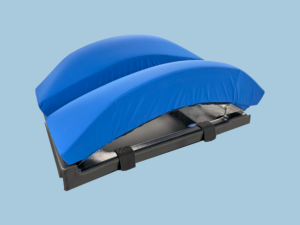
Spine surgery positioning equipment plays a critical role in creating the stable, protected, and accessible operative environment required for modern spinal procedures. Whether a team is preparing for a lumbar decompression, discectomy, fusion, cervical procedure, or complex reconstructive case, positioning is not simply a setup task. It is a clinical and engineering priority that influences exposure, imaging access, pressure management, neurovascular safety, workflow efficiency, and surgeon control from the first incision through closure.
In spine surgery, small details matter. A patient’s alignment must support the surgical objective. The table, frame, pads, head support, arm supports, straps, clamps, and rail-mounted accessories must work together as a single system. The spine must be presented with the right degree of support, the abdomen must be protected from unnecessary compression, the head and extremities must be stabilized, and the surgical field must remain accessible to the surgeon, anesthesia team, imaging equipment, and OR staff.
That is why advanced operating rooms rely on purpose-built spine positioning systems rather than improvised setups. Modern support systems are engineered to help surgical teams maintain repeatable positioning, reduce unnecessary movement, preserve access, and support patient safety during demanding procedures. For facilities looking to standardize and upgrade their spine surgery workflow, SchureMed provides high-quality surgical positioning equipment, OR table accessories, clamps, supports, and custom device capabilities designed for the realities of today’s operating room.
Why Spine Surgery Positioning Requires Specialized Equipment
Spine procedures often require long operative times, precise anatomical alignment, and uninterrupted access to the posterior, lateral, or anterior spine. Unlike shorter procedures where minor adjustments may be easier to manage, spine surgery can place sustained pressure on vulnerable anatomy if the support system is not properly selected and configured.
Specialized spine surgery positioning equipment helps address several core requirements:
- Maintaining stable spinal alignment throughout the case
- Supporting the patient in prone, lateral, supine, or other procedure-specific positions
- Reducing pressure on the abdomen, chest, face, eyes, shoulders, elbows, hips, knees, and feet
- Preserving access for fluoroscopy, C-arm imaging, navigation, or intraoperative visualization
- Supporting safe arm, head, and extremity placement
- Reducing staff strain during setup, transfer, adjustment, and breakdown
- Helping prevent movement that could compromise exposure or instrumentation accuracy
In spine surgery, positioning also impacts the surgeon’s working angles. A positioning system that improves access can reduce awkward instrument trajectories and help the surgical team maintain an efficient workflow. The right equipment allows the OR team to focus less on compensating for unstable support and more on the technical demands of the procedure.
Common Positions Used in Spine Surgery
Spine surgery may involve several patient positions depending on the procedure, anatomy, surgeon preference, and imaging requirements. Each position requires a different combination of support surfaces, restraints, padding, and table accessories.
Prone Positioning
Prone positioning is one of the most common positions for posterior spine surgery. It is frequently used for lumbar decompressions, laminectomies, discectomies, posterior fusions, and many thoracic or cervical posterior approaches. In this position, the patient lies face down while the surgical team supports the torso, pelvis, head, arms, and lower extremities.
The positioning goal is to maintain spinal alignment while minimizing pressure on the abdomen and other vulnerable areas. Proper prone positioning can help improve venous return, reduce abdominal compression, and support surgical exposure. A spine frame or dedicated support platform may be used to create the needed contour and access.
Lateral Positioning
Lateral positioning is used for selected spine procedures that require access from the side of the body. In this position, the patient is stabilized on one side using braces, pads, supports, and secure table attachments. Lateral positioning requires careful attention to shoulder, hip, knee, ankle, head, and arm alignment.
Because lateral positioning can create pressure and shear concerns, reliable braces and pads are essential. Adjustable lateral supports help maintain the intended orientation while allowing the surgical team to customize fit for patient size and anatomy.
Supine Positioning
Supine positioning may be used for anterior cervical procedures, selected lumbar procedures, and other approaches requiring access from the front. Although supine positioning may appear less complex than prone or lateral positioning, head support, arm positioning, pressure relief, and airway access remain critical.
The goal is to keep the patient secure, aligned, and accessible while maintaining safe anesthetic access and minimizing pressure on the occiput, elbows, sacrum, heels, and other high-risk points.
The Role of a Spine Frame in Modern Spine Surgery
A dedicated spine frame is one of the most important pieces of equipment in many spine procedures. The frame provides a structured platform that supports the patient while allowing the surgical team to optimize alignment and access. SchureMed’s Schure Spine Frame is designed for spine and disc surgery positioning and supports the need for controlled patient setup during a range of spine procedures.
A high-quality spine frame should provide:
- Stable patient support
- Controlled positioning for the torso and spine
- Proper pad placement
- Compatibility with OR workflow
- Accessibility for the surgical team
- Ease of setup and breakdown
- Durable construction for repeated clinical use
In prone spine cases, a frame can help create the desired lordosis or positioning profile needed for exposure. When paired with appropriate pads, arm cradles, headrests, table attachments, and accessories, the frame becomes part of an integrated spine positioning system.
Safety Considerations in Spine Surgery Positioning
Patient positioning safety is central to every spine case. Poor positioning can increase the risk of pressure injury, nerve compression, impaired circulation, eye injury, respiratory compromise, and workflow disruption. Because spine procedures can be lengthy, even small pressure or alignment problems may become clinically significant over time.
Key safety priorities include:
- Protecting pressure points with appropriate padding
- Avoiding excessive shoulder abduction or arm extension
- Maintaining neutral head and neck alignment when clinically appropriate
- Preventing abdominal compression in prone positioning
- Supporting the chest and pelvis without creating focal pressure
- Securing the patient without over-tightening straps
- Confirming that clamps and rail-mounted devices are fully locked
- Preserving access for anesthesia monitoring and airway management
- Rechecking positioning after draping, table movement, imaging adjustments, and surgical exposure
Safety should not depend on one device alone. It depends on the entire setup. The table, frame, pads, clamps, head support, arm supports, straps, and staff workflow must function together. This is why equipment compatibility is such an important part of purchasing and standardizing spine positioning systems.
Pressure Management and Nerve Protection
Spine surgery frequently involves extended operative times, which makes pressure management a major concern. The face, eyes, chest, iliac crests, knees, elbows, shoulders, and feet require careful assessment before the procedure begins. In prone positioning, the abdomen must be allowed to remain free of excessive compression whenever possible, and the head must be supported in a way that protects the eyes, airway, and cervical alignment.
Nerve protection is equally important. The brachial plexus, ulnar nerve, peroneal nerve, and other vulnerable structures can be affected by excessive stretch, compression, or poor limb alignment. Armboards, cradles, and limb support accessories should be selected and adjusted to maintain secure, anatomically appropriate positioning.
For the OR team, this means taking a systematic approach:
- Confirm that arms are supported without excessive abduction
- Pad elbows and avoid direct pressure on the ulnar nerve
- Avoid unsupported wrists or hands
- Support knees, ankles, and feet appropriately
- Ensure the head and neck are not rotated beyond safe limits
- Reassess all pressure points before the case starts
Imaging Access and Radiolucency
Modern spine surgery often relies on fluoroscopy, C-arm access, navigation, or other imaging technologies. Positioning equipment must support these requirements rather than obstruct them. A stable frame is only effective if it also allows imaging teams to capture the views required for localization, instrumentation, and verification.
The right spine surgery positioning setup should help maintain:
- Clear access around the operative field
- Adequate C-arm movement
- Reduced equipment interference
- Stable patient alignment during imaging
- Consistent positioning across repeated image checks
This is especially important in procedures where instrumentation accuracy depends on repeatable imaging conditions. Equipment that shifts, loosens, blocks access, or requires repeated repositioning can disrupt workflow and introduce unnecessary inefficiency.
OR Table Clamps and Accessory Stability
OR table clamps may seem like small components, but they are essential to the strength and reliability of the overall positioning system. Clamps secure the accessories that support the patient, stabilize limbs, hold braces, and connect equipment to the table. In spine surgery, where the patient must remain stable, and the surgical team may work around multiple accessories, clamp performance matters.
SchureMed’s OR table clamp line is engineered for strength, speed, and compatibility across surgical table configurations. Options such as Schure Socket XL, Schure Socket, INFINITY Clamp, CamLoc Rail Clamp, Universal Rail Clamp, Simple Clamp, Deluxe Rail Clamp, SpringLoc Clamp, and other clamp systems are designed to support dependable attachment of OR accessories to table rails.
When evaluating clamps for spine surgery positioning, surgical teams should consider:
- Compatibility with existing OR table side rails
- Ability to mount at the needed rail location
- Support for round posts, flat posts, or square posts
- Secure locking performance
- Ease of setup and removal
- Suitability for sterile-field or draped applications
- Patient weight capacity and accessory load requirements
A positioning system is only as reliable as its connection points. Secure rail fixation helps reduce unwanted motion, protects the setup, and gives the surgical team confidence that accessories will remain stable throughout the procedure.
Armboards, Head Supports, Straps, and OR Accessories
Spine positioning requires more than the primary frame or table. Accessories complete the system. Armboards, head supports, straps, pads, lateral braces, and specialty supports are used to tailor positioning to the patient and procedure.
Important accessories may include:
- Armboards for safe upper extremity support
- Laminectomy arm cradles for prone positioning
- Headrests or head and chin straps for head stabilization
- Lateral braces for side-lying positions
- Foam pads to distribute pressure
- Restraint straps for secure fixation
- Table extensions when additional support surface is needed
- Rail clamps to secure accessory posts
SchureMed’s OR accessory offering includes patient positioning supports for multiple surgical applications, including lateral positioners, lateral braces, armboards, restraint straps, head and chin straps, and other components that can be integrated into a complete positioning strategy.
Modern Support Systems and Modular OR Design
Today’s operating rooms need equipment that can adapt across procedures, surgeons, patient sizes, and table platforms. Modular positioning systems are valuable because they help facilities standardize core equipment while still allowing procedure-specific customization.
A modular approach gives surgical teams several advantages:
- Faster setup through familiar components
- Better compatibility across procedure types
- Easier replacement of pads and accessories
- More consistent staff training
- Improved inventory management
- The ability to add specialized components as surgical needs evolve
SchureMed’s product ecosystem reflects this need for configurable OR solutions. From spine frames and lateral positioning systems to OR table clamps and accessories, the goal is to help teams build stable, efficient, and procedure-specific support systems without relying on makeshift combinations.
Custom Spine Positioning Solutions
Not every surgical challenge can be solved with a standard product. Some facilities need unique solutions based on surgeon preference, patient population, imaging workflow, table compatibility, procedure type, or space constraints. This is where SchureMed’s in-house research, design, engineering, and manufacturing capabilities become especially valuable.
Custom or semi-custom positioning solutions can help address challenges such as:
- Unique patient anatomy or size ranges
- Specialized access angles
- Imaging clearance limitations
- Incompatibility with existing OR tables
- Need for faster setup or reduced staff handling
- Surgeon-specific workflow requirements
- Integration with other positioning devices
Because SchureMed maintains in-house design and manufacturing capabilities, its team can assess the clinical need, recommend an existing product when appropriate, or design and build a solution from the ground up. This ability is especially important for spine, orthopedic, pediatric, laparoscopic, and other advanced surgical environments where positioning must be precise and dependable.
How to Select Spine Surgery Positioning Equipment
Choosing spine surgery positioning equipment should involve surgeons, nurses, anesthesia providers, biomedical teams, procurement, and sterile processing stakeholders. The best equipment choice is not based on a single product feature. It is based on how the system performs in the full OR environment.
Consider the following selection criteria:
- Procedure fit: Does the system support prone, lateral, supine, or procedure-specific positioning needs?
- Stability: Does it maintain patient alignment without unwanted movement?
- Patient protection: Does it help reduce pressure points and protect vulnerable anatomy?
- Imaging compatibility: Does it preserve access for fluoroscopy, C-arm movement, or navigation?
- Table compatibility: Does it mount securely to existing OR tables and side rails?
- Clamp performance: Are rail-mounted accessories stable and easy to secure?
- Staff workflow: Is setup intuitive, efficient, and repeatable?
- Cleaning and maintenance: Are pads, accessories, and components manageable for routine use?
- Modularity: Can the system adapt as procedural needs change?
- Manufacturer support: Does the supplier provide documentation, training, replacement accessories, and technical guidance?
A strong spine positioning program is built around repeatability. When teams use equipment designed for the procedure, staff can follow standardized setup steps, confirm safety points more consistently, and reduce variability from case to case.
Staff Training and Positioning Protocols
Even the best equipment requires proper training. Spine positioning should be supported by written protocols, competency training, and clear team communication. Before the patient enters the room, staff should verify the planned position, required supports, clamps, pads, straps, imaging needs, and accessory compatibility.
A practical spine positioning checklist may include:
- Confirm procedure, surgeon preference, and planned position
- Inspect table, frame, clamps, pads, and accessories
- Confirm required weight capacities and compatibility
- Prepare head support, arm supports, and pressure relief pads
- Verify imaging access before final draping
- Check that all clamps and accessory posts are locked
- Confirm anesthesia access and airway visibility
- Reassess pressure points after final positioning
- Document positioning details according to facility policy
Consistent training helps ensure the equipment is used as intended and that patient protection remains central throughout the case.
FAQ
What is spine surgery positioning equipment?
Spine surgery positioning equipment includes frames, pads, clamps, arm supports, headrests, straps, lateral braces, table accessories, and support systems used to safely align and stabilize the patient during spinal procedures.
Why is positioning so important in spine surgery?
Positioning affects surgical exposure, imaging access, neurologic safety, pressure management, ventilation, circulation, and overall workflow. Stable positioning helps the surgical team work efficiently while protecting the patient.
What equipment is commonly used for prone spine surgery?
Common equipment includes a spine frame, chest and pelvic supports, head support, arm cradles or armboards, pressure relief pads, straps, and secure OR table clamps for accessory fixation.
How does a spine frame support surgical access?
A spine frame helps position the patient in a stable, procedure-appropriate orientation while supporting the torso and allowing the surgeon access to the operative site. It can also help create positioning conditions needed for certain spine procedures.
What should teams look for in OR table clamps?
Teams should look for secure locking, compatibility with table rails, support for required accessory posts, appropriate weight capacity, ease of use, and the ability to maintain stability during long procedures.
Can positioning equipment help reduce complications?
Proper positioning equipment can help reduce risks related to pressure injury, nerve compression, unwanted movement, poor alignment, and workflow disruption. Equipment must be paired with trained staff and careful positioning protocols.
Does SchureMed offer custom positioning solutions?
Yes. SchureMed offers a full line of patient positioning products and has in-house research, design, engineering, and manufacturing capabilities to recommend or create custom solutions for specific OR requirements.
Partner with SchureMed for Advanced Spine Surgery Positioning Solutions
Spine surgery demands more than basic table support. It requires a coordinated positioning system engineered for stability, access, patient protection, imaging compatibility, and efficient OR workflow. From spine frames and lateral supports to OR table clamps, armboards, straps, and custom positioning solutions, SchureMed offers advanced equipment designed to help surgical teams optimize patient positioning for demanding procedures.
SchureMed offers a full line of products to optimize patient positioning for your requirements. From orthopedic surgery to pediatric laparoscopic procedures, SchureMed provides custom devices and dependable OR solutions that help improve workflow and support surgical precision. With in-house research and manufacturing teams, SchureMed produces superior operating room equipment at more reasonable costs than many competitors. Our state-of-the-art manufacturing facility, design engineers, and knowledgeable inside staff allow the team to assess your exact needs and either recommend an existing product or design and build the optimal solution from the ground up.
To upgrade your spine surgery positioning setup, improve OR efficiency, and explore modern support systems built for high-performance surgical environments, contact us today.
