
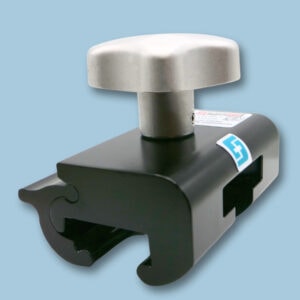
In a modern operating room, surgical table clamps serve as critical connection points between the operating table and the accessories used to position, support, restrain, or provide access to the patient. Although a clamp may appear to be a relatively small component, its mechanical performance can influence the stability of the entire positioning setup. At SchureMed, we engineer OR table clamps to provide secure fixation, efficient adjustment, broad accessory compatibility, and dependable performance in demanding surgical environments.
A well-designed clamp must do more than hold an accessory against a table rail. It must resist movement under load, accommodate the correct mounting-post geometry, integrate properly with the surgical table, and allow the clinical team to make controlled adjustments. For hospitals, ambulatory surgery centers, and specialty surgical facilities, selecting the right clamp is an important equipment decision rather than a minor accessory purchase.
What Is a Surgical Table Clamp?
A surgical table clamp is a mechanical interface that secures a positioning accessory or surgical device to an operating table side rail. Depending on its design, the clamp may accept a round post, flat blade, rectangular bar, square post, stirrup blade, or another mounting configuration.
Clamps can be used with many types of OR equipment, including:
- Armboards and extremity supports
- Stirrups and leg-positioning systems
- Lateral braces and patient-positioning supports
- Restraint and safety accessories
- Anesthesia screens
- Retractor systems
- Orthopedic positioning components
- Procedure-specific supports
- Custom and semi-custom surgical devices
The clamp creates the mechanical link that allows these accessories to remain positioned relative to the table. If that connection is not sufficiently rigid or compatible with the intended accessory, the setup may become difficult to control.
Clamp selection should account for the complete positioning system, including the table rail, mounting-post dimensions, accessory orientation, expected loading, draping conditions, and required range of adjustment.
Why Clamp Stability Matters in the Operating Room
Patient positioning depends on predictable mechanical support. Once the surgical team establishes the desired position, the equipment should remain stable throughout the procedure unless an intentional adjustment is made.
A stable clamp helps minimize unwanted accessory movement, rotation, shifting, or positional drift. This is particularly important during orthopedic, spine, laparoscopic, robotic, and imaging-intensive procedures, where small changes in alignment can affect surgical access, imaging clearance, or workflow.
Effective fixation can support several clinical and operational objectives:
- Maintaining consistent patient alignment
- Preserving the surgical exposure established during setup
- Reducing repeated equipment adjustments
- Supporting predictable imaging access
- Improving reproducibility between cases
- Helping staff configure accessories efficiently
- Supporting surgeon and staff ergonomics
- Reducing reliance on improvised mounting methods
Clamp rigidity must also be balanced with usability. A clamp that provides a strong holding force but is difficult to install, reposition, or release can slow room setup. An effective solution combines secure fixation with an intuitive, controlled operating mechanism.
Understanding Surgical Table Rails and Mounting Posts
Not every operating table uses the same rail dimensions, and not every accessory uses the same mounting-post geometry. These differences are central to selecting a suitable clamp.
Standard United States surgical table side rails commonly measure approximately 3/8 inch wide by 1 1/8 inches high, or .95 cm by 2.85 cm. International rail profiles vary in size and design. Most SchureMed clamps are available in alternative models designed for international surgical table side rail sizes, helping facilities select configurations that match their equipment.
SchureMed’s INFINITY Clamps offer an additional level of versatility. These universal clamps use an adjustable jaw designed to accommodate surgical table side rails used throughout the world. This adjustable design can reduce the need to maintain multiple clamp models for facilities that use tables with different rail profiles.
Accessory mounting posts also vary. Common interfaces include:
- Round posts up to 5/8 inch, or 1.6 cm, in diameter
- 18 mm, or 1.8 cm, round rods
- 3/4-inch, or 1.9 cm, round rods
- Flat posts measuring 1 inch by 3/8 inch, or 2.5 cm by .95 cm
- Flat posts measuring 1 inch by 1/4 inch, or 2.5 cm by .64 cm
- 20 mm, or 2 cm, square posts
- Procedure-specific stirrup blades
The clamp must match both the rail and the accessory. A clamp designed for a round post cannot automatically be used with a flat blade. Likewise, a clamp manufactured for a standard domestic rail may require an international model when used on a table with a different side rail profile.
At SchureMed, we evaluate these connection points as part of a complete system. Correct interface selection supports stronger fixation, more efficient setup, and greater flexibility across an operating room equipment fleet.
Different Types of Surgical Table Clamps
No single clamp design is ideal for every procedure or accessory. We offer multiple clamp configurations because operating rooms require different levels of compatibility, speed, orientation, mounting capability, and rail adaptability.
Schure Socket XL
The Schure Socket XL is designed to connect at any location along a standard OR table side rail, including over rail stand-offs. It fits standard rails measuring 3/8 inch wide by 1 1/8 inches high, or .95 cm by 3 cm.
This patented SchureMed design can be attached directly to any point along the side rail. Staff does not have to slide it onto the rail from an endpoint, which can be especially valuable when other accessories are already installed or access to the rail end is restricted.
The Schure Socket XL accepts round mounting posts up to 5/8 inch, or 1.6 cm, in diameter and rectangular posts up to 1 inch by 3/8 inch, or 2.5 cm by .95 cm. Its hardened clamping surface is engineered to generate a strong holding force and stop unwanted accessory movement.
The clamp secures with a quick turn, allowing the surgical team to establish a rigid connection without being limited to a rail notch or table end. The Schure Socket XL has a patient weight capacity of 800 pounds, or 363 kg.
Schure Socket
The Schure Socket provides a fast and reliable method for securing surgical accessories anywhere along a standard table side rail measuring approximately 3/8 inch wide by 1 1/8 inches high, or .95 cm by 2.85 cm.
Like the Schure Socket XL, it can be attached at the desired location without being slid onto the rail from an endpoint. It does not require a rail notch and accepts round mounting posts up to 5/8 inch, or 1.6 cm, in diameter.
This flexibility can be especially valuable when an accessory must be positioned at a precise point along the table. The Schure Socket has a patient weight capacity of 800 pounds, or 363 kg.
Stirrup Clamp
Stirrup and limb-positioning systems can create substantial mechanical demands at the table rail. SchureMed’s Stirrup Clamp accepts rectangular or flat mounting posts measuring 1 inch by 1/4 inch, or 2.5 cm by .64 cm.
The Stirrup Clamp does not accept round mounting posts. It is designed to hold compatible accessories in a vertical position.
It can be attached anywhere along the surgical table side rail rather than being limited to rail ends or notches. This allows the surgical team to place the stirrup or accessory at the location required for the patient and procedure.
The Stirrup Clamp has a patient weight capacity of 1,000 pounds, or 454 kg. Its heavy-duty construction supports demanding applications where rigid vertical accessory positioning is essential.
INFINITY Clamp
The INFINITY Clamp is a universal surgical table clamp engineered around an adjustable jaw. This jaw adapts to surgical table rail profiles used throughout the world, helping eliminate the need to purchase and maintain numerous rail-specific clamp models.
The INFINITY Clamp connects quickly anywhere along a compatible rail, including over rail stand-offs. It supports both vertical and horizontal accessory mounting.
Depending on the accessory, the INFINITY Clamp accepts:
- 5/8-inch, or 1.6 cm, round rods
- .709-inch, or 18 mm, round rods
- 3/4-inch, or 1.9 cm, round rods
- Flat bars measuring 1 inch by up to 3/8 inch, or 2.5 cm by up to .95 cm
This broad compatibility can be especially valuable for health systems with multiple table brands, domestic and international rail profiles, or diverse accessory inventories. The INFINITY Clamp has a patient weight capacity of 800 pounds, or 363 kg.
INFINITY Fixed Clamp
The INFINITY Fixed Clamp combines the universal, adjustable rail jaw of the INFINITY product line with compatibility for blade-style and specialty mounting posts.
It accepts SchureMed’s Great White Stirrup Blade. Great White Stirrups are SchureMed’s premium line of surgical stirrups, designed to support dependable lower-extremity positioning in demanding surgical environments.
The INFINITY Fixed Clamp can also accommodate:
- 5/8-inch, or 1.6 cm, round rods
- .709-inch, or 18 mm, round rods
- 3/4-inch, or 1.9 cm, round rods
- Flat bars measuring 1/4 inch by 1 inch, or .64 cm by 2.5 cm
- Flat bars measuring 3/8 inch by 1 inch, or .95 cm by 2.5 cm
The adjustable jaw allows the clamp to connect securely to surgical table rails used throughout the world. The INFINITY Fixed Clamp has a patient weight capacity of 800 pounds, or 363 kg.
INFINITYsq Clamp
Square mounting posts require a clamp designed specifically for their geometry. The INFINITYsq Clamp accepts a .787-inch, or 20 mm, square bar. It does not accept standard flat mounting posts.
The clamp supports both vertical and horizontal attachment of compatible square-post accessories. Like the other products in the INFINITY line, it incorporates a universal adjustable jaw designed to fit surgical table rail configurations used worldwide.
This gives facilities a way to integrate square-post accessories across tables with different rail profiles. The INFINITYsq Clamp has a patient weight capacity of 800 pounds, or 363 kg.
CamLoc Rail Clamp
The CamLoc Rail Clamp is designed for use in the sterile field. It can attach anywhere along the table rail over surgical drapes and accepts round posts up to 5/8 inch, or 1.6 cm, in diameter and flat posts up to 1 inch by 3/8 inch, or 2.5 cm by .95 cm.
The standard CamLoc Rail Clamp is designed for use over one to two drapes. A large configuration is available for setups involving three to five drapes.
SchureMed also offers a low-profile CamLoc option. This version accepts only flat mounting posts and provides a sleeker, more compact configuration for applications where reducing the clamp footprint is important.
The CamLoc Rail Clamp has a patient weight capacity of 500 pounds, or 227 kg. Its design addresses an important practical concern because drapes add material between the clamp and rail, which can influence engagement. Selecting a clamp intended for the specific draping condition helps support reliable attachment.
Universal Rail Clamp
The Universal Rail Clamp is a spring-loaded option that snaps onto a standard OR table rail at any point. It fits standard rails measuring approximately 3/8 inch wide by 1 1/8 inches high, or .95 cm by 3 cm.
It accepts round mounting posts up to 5/8 inch, or 1.6 cm, in diameter and rectangular posts up to 1 inch by 3/8 inch, or 2.5 cm by .95 cm. An ergonomic handle locks the accessory securely for vertical or horizontal positioning.
This type of design can support an efficient setup because staff do not have to slide the clamp onto the rail from an endpoint. The ability to attach directly at the required location is valuable when other accessories are already mounted or access to the rail end is limited.
The Universal Rail Clamp has a patient weight capacity of 350 pounds, or 159 kg.
Simple Clamp
The Simple Clamp provides dependable fixation for general-purpose accessory mounting. It accepts a flat mounting post measuring 1 inch by 3/8 inch, or 2.5 cm by .95 cm, when mounted vertically.
For horizontal mounting, the Simple Clamp accepts a blade measuring 1 inch by 1/4 inch, or 2.5 cm by .64 cm. This distinction is important because the appropriate blade size depends on the intended accessory orientation.
The Simple Clamp attaches to compatible table rail ends or notches and has a patient weight capacity of 720 pounds, or 327 kg.
Deluxe Rail Clamp
The Deluxe Rail Clamp accepts flat mounting posts measuring 1 inch by 3/8 inch, or 2.5 cm by .95 cm, as well as round mounting posts up to 5/8 inch, or 1.6 cm, in diameter.
Unlike clamps that must be introduced from the end of the rail, the Deluxe Rail Clamp can be attached anywhere along the surgical table side rail. It supports compatible accessories in either a vertical or horizontal orientation.
This placement flexibility can make the clamp easier to integrate into existing table setups. The Deluxe Rail Clamp has a patient weight capacity of 500 pounds, or 227 kg.
SpringLoc Clamp
The SpringLoc Clamp is designed for fast, one-handed operation. Its pull-to-release lever and spring-loaded mechanism allow the clamp to drop onto a standard OR table rail without requiring a rail notch.
It accepts flat mounting posts measuring 1 inch by 1/4 inch, or 2.5 cm by .64 cm. The spring-loaded design allows staff to install and remove compatible accessories efficiently while still achieving a secure connection.
The SpringLoc Clamp has a patient weight capacity of 800 pounds, or 363 kg. This combination of rapid operation and dependable fixation can help support demanding surgical workloads and efficient room turnover.
Choosing the Right Clamp for an OR Application
Clamp selection should begin with the intended clinical and mechanical application. The highest-capacity clamp is not automatically the best choice. Compatibility, orientation, table integration, workflow, and mounting-post geometry are equally important.
Key questions include:
- What surgical table and rail profile will be used?
- Is the table equipped with a United States or international side rail?
- Does the facility use more than one table brand or rail standard?
- Is the accessory post round, flat, rectangular, square, or blade-style?
- What are the exact post dimensions?
- Will the accessory be mounted vertically or horizontally?
- Must the clamp attach anywhere along the rail?
- Will it need to connect over a rail stand-off?
- Will the clamp be installed over surgical drapes?
- Is a compact or low-profile design required?
- Is one-handed installation important?
- What loading and positioning demands are expected?
- Does the application require a sterile-field clamp?
- Will the clamp be used with a custom positioning device?
The manufacturer’s instructions for use should always be reviewed before clinical application. Staff should confirm the intended rail, post dimensions, weight limits, installation procedure, inspection requirements, and cleaning guidance for the specific product.
Clamp Capacity Must Be Evaluated as Part of the Complete System
Published clamp capacity is an important specification, but it should not be interpreted in isolation. The safe performance of a positioning setup is determined by the complete system rather than the clamp alone.
The system may include:
- The surgical table
- The table side rail
- The clamp
- The accessory post
- The positioning accessory
- Pads, straps, or supports
- The patient’s position and weight distribution
The lowest-rated or least-compatible component may define the practical limitations of the assembly. Forces can also change depending on accessory length, angle, leverage, and the direction of loading.
For example, a long support arm can create greater leverage at the clamp than a short accessory positioned close to the table rail. Dynamic movement and repositioning can also generate loads that differ from those present in a static setup.
Clinical teams should follow the instructions for every connected component and verify that the complete configuration is appropriate for the intended procedure.
Supporting Efficient and Repeatable OR Setup
Clamp design has a direct effect on workflow. A clamp that can be placed anywhere along a rail may reduce the need to remove adjacent accessories or slide components from the table end. A spring-loaded or one-handed mechanism may shorten installation time. A universal adjustable jaw may allow staff to use the same clamp across several table platforms.
These features can support more repeatable room configurations, particularly when facilities standardize procedure-specific setups.
A consistent clamp strategy may help teams:
- Reduce setup variability
- Simplify staff training
- Improve accessory organization
- Decrease unnecessary equipment changes
- Support efficient room turnover
- Standardize positioning protocols
- Expand the usefulness of existing OR accessories
- Improve compatibility across domestic and international tables
Standardization does not necessarily mean using one clamp for every task. It means selecting a controlled set of clamps that covers the facility’s tables, accessories, and procedural requirements without unnecessary duplication.
Inspection, Cleaning, and Preventive Maintenance
Reusable surgical table clamps operate in a demanding environment. They may be exposed to repeated tightening cycles, mechanical loading, cleaning agents, drapes, fluids, impacts, and frequent transport.
Before use, staff should inspect each clamp according to its instructions for use. Areas requiring attention may include:
- Jaw and rail-contact surfaces
- Handles, levers, and locking mechanisms
- Threads and moving components
- Post-receiving openings
- Springs and release mechanisms
- Signs of corrosion, deformation, or abnormal wear
- Debris that could interfere with engagement
- Labels and identification markings
A clamp should not be used if it does not tighten, release, or engage as intended. Preventive maintenance and prompt removal of damaged equipment help preserve the integrity of the positioning system.
Cleaning and disinfection procedures should also follow the manufacturer’s documentation. Unapproved methods or chemicals may damage finishes, affect moving parts, or reduce the clamp’s service life.
Engineering Clamp Solutions for Specialized Procedures
Some surgical teams encounter accessory-mounting challenges that cannot be solved with a standard catalog configuration. The issue may involve an unusual table rail, a proprietary mounting post, limited clearance, imaging interference, a unique load path, or a procedure-specific accessory.
At SchureMed, we can evaluate these challenges through our bespoke design process. Our engineers work with surgeons, nurses, procurement teams, and other clinical stakeholders to understand the procedural, anatomical, spatial, and workflow requirements of the application.
Our process may include:
- Clinical needs assessment
- Rail and accessory interface analysis
- Feasibility evaluation
- Concept development
- CAD engineering
- Physical prototyping
- Ergonomic and mechanical testing
- Load and durability evaluation
- Manufacturing planning
- Quality and regulatory documentation
- Pilot production
- Final inspection and deployment support
Because we maintain in-house research, design, engineering, and manufacturing capabilities, we can assess whether an existing clamp meets the requirement or whether a custom or semi-custom solution is more appropriate. Our integrated approach helps us retain control over quality, manufacturability, cost, and product performance.
Frequently Asked Questions
What is the purpose of a surgical table clamp?
A surgical table clamp secures a positioning accessory or surgical device to the operating table side rail. It creates a stable mechanical connection between the table and equipment such as an armboard, stirrup, brace, support, or retractor component.
Are all surgical table clamps universal?
No. Some clamps are designed for a specific rail profile or mounting-post geometry. SchureMed’s INFINITY Clamps feature universal adjustable jaws designed to accommodate surgical table rail profiles used throughout the world.
Does SchureMed offer clamps for international table rails?
Yes. Most SchureMed clamps have alternative models available for international surgical table side rail sizes. Our INFINITY line also offers universal adjustable-jaw compatibility.
What is the difference between a round-post clamp and a blade clamp?
A round-post clamp has an opening designed for a cylindrical mounting post. A blade clamp accepts a flat or procedure-specific mounting blade. Some clamps accept multiple post styles, but compatibility must always be confirmed before use.
Can a clamp be attached anywhere along the table rail?
It depends on the clamp. Products such as the Schure Socket XL, Schure Socket, Stirrup Clamp, INFINITY Clamp, Universal Rail Clamp, and Deluxe Rail Clamp can be attached at multiple points along the side rail. Other clamps may require a rail end or notch.
Can surgical table clamps be installed over drapes?
Only clamps designed and specified for that use should be installed over drapes. The CamLoc Rail Clamp is designed for sterile-field applications and is available in configurations based on the number of drapes used.
What is a low-profile rail clamp?
A low-profile clamp has a smaller, more compact body intended to reduce the footprint around the surgical table. SchureMed’s low-profile CamLoc option accepts flat mounting posts.
How do we determine the correct clamp capacity?
Review the manufacturer’s stated patient weight capacity and instructions for use for every component in the positioning system. Capacity must be evaluated together with table limits, accessory limits, mounting geometry, patient weight distribution, and the forces generated by the procedure.
How often should OR table clamps be inspected?
Clamps should be visually and functionally inspected before use and maintained according to the manufacturer’s instructions and the facility’s preventive maintenance program.
Can SchureMed develop a clamp for a specialized accessory?
Yes. Our in-house engineering and manufacturing teams can evaluate custom and semi-custom clamp requirements, including unusual rail profiles, specialty posts, procedural constraints, and integration with existing positioning equipment.
Build a More Stable and Adaptable OR with SchureMed
The right surgical table clamp helps transform individual accessories into a stable, integrated positioning system. Whether your facility requires rapid rail attachment, international table compatibility, sterile-field operation, heavy-duty stirrup support, square-post mounting, or a custom interface, our team can help identify the appropriate solution.
At SchureMed, we offer a full line of products designed to optimize patient positioning for your procedural requirements. From orthopedic surgery to pediatric laparoscopic procedures, our equipment supports the stability, access, and efficiency demanded by modern operating rooms.
Our in-house research, design, engineering, and manufacturing teams allow us to produce advanced operating room equipment at more reasonable costs than manufacturers that rely extensively on outsourcing. With our state-of-the-art manufacturing facility, experienced design engineers, and knowledgeable inside staff, we can assess your exact requirements, recommend an existing product, or design and build an optimal solution from the ground up.
Visit our website to explore our complete selection of surgical table clamps and patient-positioning equipment. To discuss your facility’s requirements or request a quote, email our team directly at [email protected]. Let us help you create a safer, more stable, and more versatile operating room.
