
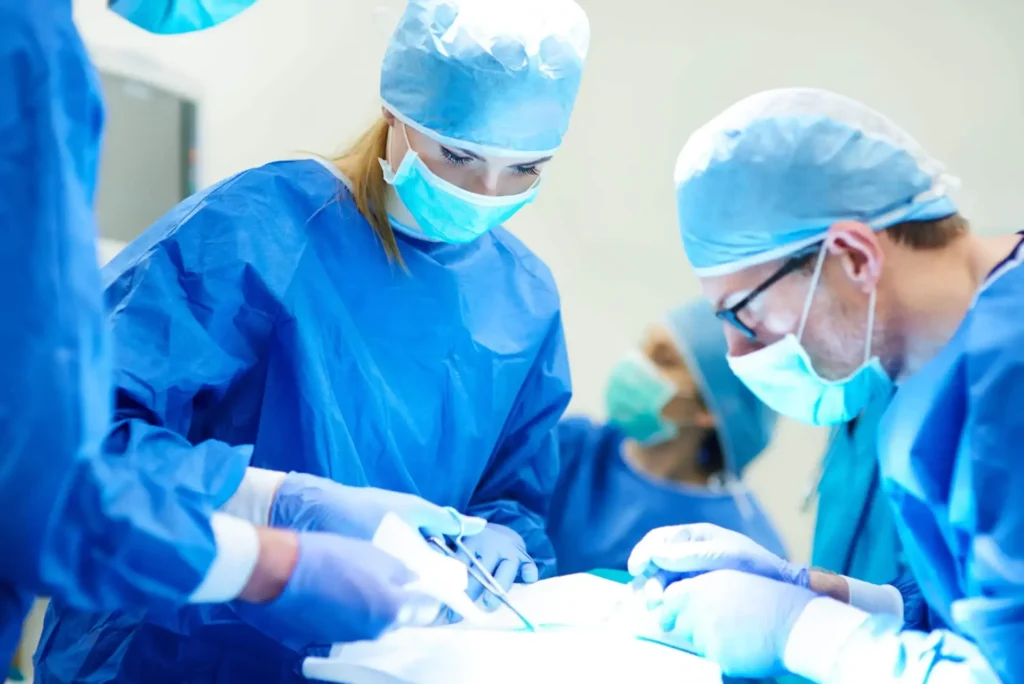
Beach chair positioning is one of the most important setup decisions in shoulder surgery because it directly affects surgical access, visualization, patient stability, anesthesia management, and operating room efficiency. In shoulder arthroscopy, rotator cuff repair, labral repair, total shoulder arthroplasty, reverse total shoulder arthroplasty, and other upper extremity procedures, the beach chair position places the patient in a controlled semi-upright posture that supports access to the glenohumeral joint, subacromial space, clavicle, proximal humerus, and surrounding soft tissue structures. SchureMed describes this position as a semi-upright seated configuration that can improve visualization of the glenohumeral joint, rotator cuff, and surrounding anatomy when the patient is properly stabilized with surgical positioning equipment.
Why the Beach Chair Position Is Used in Shoulder Surgery
The beach chair position allows the surgical team to work from an anatomical orientation that closely resembles the patient’s natural seated posture. This can be especially valuable in procedures where the surgeon needs consistent access to the anterior, lateral, and posterior aspects of the shoulder without excessive traction or repeated intraoperative repositioning. Compared with a fully supine position, the semi-upright setup reduces scapular compression against the table surface and can help present the shoulder girdle in a more accessible position. For arthroscopic shoulder procedures, visualization is often improved because gravity can assist humeral head positioning and fluid management. SchureMed notes that the beach chair position can improve access to the rotator cuff footprint, superior labrum, glenoid rim, and arthroscopic portal angles while supporting more ergonomic instrument control. For open procedures, the same position can help expose the deltopectoral interval, proximal humerus, and joint space while allowing the surgeon and assistants to work efficiently around the operative field. The position also supports a more ergonomic surgical workflow. Surgeons often benefit from upright access, more natural arm and wrist angles, and improved line-of-sight to the surgical site and monitor. However, the benefits of the position depend heavily on equipment selection, secure fixation, careful head and neck alignment, torso stability, and coordination with anesthesia.Core Goals of Safe Beach Chair Positioning
The objective is not simply to raise the back section of the table or place the patient upright. A high-quality beach chair setup should achieve several technical goals at once:- Maintain neutral head, cervical spine, and airway alignment
- Stabilize the torso, pelvis, and lower extremities to prevent sliding or rotation
- Provide clear access to the operative shoulder while protecting the contralateral side
- Reduce pressure on bony prominences and vulnerable soft tissue areas
- Preserve anesthesia access to the airway, monitoring lines, and IVs
- Maintain compatibility with surgical imaging, arthroscopy equipment, and sterile draping
- Secure accessories with stable table clamps and positioning hardware
Preoperative Planning and Team Coordination
Best practice begins before the patient enters the room. The surgical team should confirm the planned procedure, operative side, anticipated incision or portal locations, patient body habitus, anesthesia requirements, table compatibility, and required accessories. For patients with cervical spine limitations, kyphosis, obesity, instability, or elevated risk for pressure injury, positioning should be planned with additional precision. Before induction and final positioning, the team should verify:- Beach chair system compatibility with the operating table
- Patient weight capacity of the chair, clamps, and accessories
- Proper function of articulation mechanisms and locking points
- Availability of head and chin supports, lateral braces, pads, straps, and arm positioning devices
- Clearance for C-arm, arthroscopy tower, anesthesia equipment, and surgeon access
- Integrity of cushions, pads, straps, mounting posts, and rail clamps
Establishing the Correct Patient Angle
The beach chair position typically involves elevating the torso from a low reclined angle to a more upright seated posture. SchureMed’s Powered Surgical Beach Chair and E-Z Lift Surgical Beach Chair both offer 0 to 90 degree articulation, allowing the team to adapt the patient angle to the procedure and surgeon preference. Angle selection should balance exposure, hemodynamic management, and patient stability. A lower angle may be preferred when gradual elevation is needed or when anesthesia is closely managing blood pressure. A higher angle may improve exposure for certain shoulder procedures, but it increases the importance of torso, pelvic, head, and leg stabilization. The patient should be elevated in a controlled manner, with the team monitoring alignment and confirming that the pelvis has not shifted and the cervical spine remains neutral. SchureMed’s Powered Surgical Beach Chair is engineered to adjust from 0 to 90 degrees in 8 seconds using smooth, controlled motion and push-button hand control. It also uses a self-contained motor that does not rely on the surgical table for power. This type of controlled articulation can reduce manual handling demands and help standardize the transition from supine to seated positioning.Head, Neck, and Airway Alignment
Head and cervical positioning are among the most critical safety considerations in beach chair shoulder surgery. The head should be secured without excessive flexion, extension, rotation, or lateral tilt unless intentionally required and clinically appropriate. Poor head alignment can compromise airway access, create cervical strain, or interfere with anesthesia management. A stable head positioning system should allow secure fixation while accommodating patient anatomy. SchureMed’s Powered Surgical Beach Chair includes a double-ball joint head rest that allows the head to tilt 30 degrees in every direction, including forward, backward, and side-to-side. It is also described as safely securing the patient’s head, including for kyphosis patients. The E-Z Lift Surgical Beach Chair also features a sliding headrest and double-ball joint head system designed to secure the patient’s head. Disposable face masks or head and chin straps may be used, depending on the system and institutional protocol. SchureMed’s disposable full face mask positioners are designed for use with SchureMed shoulder chairs and hold the patient’s head securely during surgical procedures.Torso, Pelvis, and Lower Extremity Stabilization
The pelvis is the foundation of the beach chair position. If the pelvis shifts, slides, or rotates, the upper body alignment can change, affecting portal accuracy, shoulder exposure, and pressure distribution. A secure setup should prevent the patient from sliding down the chair as the torso is elevated. Key stabilization priorities include:- Positioning the pelvis squarely before elevation
- Using appropriate safety straps and supports according to protocol
- Padding pressure points at the sacrum, heels, elbows, and contralateral arm
- Supporting the knees and lower legs to reduce sliding forces
- Confirming that the torso remains centered after final chair articulation
- Rechecking alignment after draping and before incision
Arm Positioning and Surgical Access
The operative arm must be positioned to support exposure, reduce strain, and allow smooth intraoperative manipulation. In arthroscopy, the team may need fine control over abduction, forward flexion, rotation, and traction-free visualization. In arthroplasty or fracture-related shoulder work, the arm may need to be mobilized repeatedly while preserving sterility and maintaining shoulder access. SchureMed’s Complete SchureLoc XPS Shoulder System includes a shoulder positioning chair, SchureLoc XPS unit, Multi-Axis Arm Positioner, Shoulder Chair Dolly, Schure Socket XL, sterile kit, and head and chin straps, with a choice of either the Powered Beach Chair or E-Z Lift Beach Chair. The SchureLoc XPS is designed for beach chair or lateral positioning and maintains steady positioning from start to finish, reducing the need for a surgical aid to hold the limb during the procedure. A dedicated arm positioning system can improve consistency during shoulder surgery by allowing controlled limb placement without relying on manual support throughout the case. This supports surgical efficiency and may reduce staff fatigue, particularly during longer arthroscopic or reconstructive procedures.Equipment Guide: What to Look For in a Surgical Beach Chair System
A shoulder beach chair system should be evaluated as a complete platform rather than as a single accessory. Important equipment features include:- Controlled articulation: Smooth adjustment from supine to seated positioning helps reduce manual strain and sudden patient movement.
- Adequate patient weight capacity: The chair, clamps, positioners, straps, and supports must all be rated appropriately for the patient and procedure.
- Stable head support: Adjustable head fixation should maintain neutral alignment while accommodating anatomy and airway needs.
- Shoulder exposure panels: Pull-away or removable panels can improve access to the operative shoulder.
- Lateral support: Lateral braces help prevent torso drift and rotational instability.
- Arm positioning compatibility: Integration with multi-axis arm positioners can improve control of the operative limb.
- Table compatibility: Systems should attach securely to the facility’s operating tables without unreliable workarounds.
- Transport and storage: A dedicated dolly can improve handling, storage, and setup efficiency.
The Role of OR Table Clamps and Accessory Fixation
Beach chair positioning is only as stable as the fixation system supporting the accessories. Rail clamps secure lateral braces, arm positioners, support posts, and other positioning devices to the operating table or chair system. Inadequate clamp selection can allow drift, vibration, rotation, or accessory movement during the case. SchureMed’s OR Table Clamps are engineered for strength, speed, and compatibility, with options designed to anchor accessories to operating room tables. The Schure Socket XL, for example, fits standard OR table side rails and accepts round and rectangular mounting posts, while supporting a patient weight capacity of 800 lbs. SchureMed’s INFINITY Clamp is designed with an adjustable jaw that adapts to surgical tables worldwide, connects quickly along the rail, and supports vertical or horizontal accessory mounting. For shoulder procedures, clamp selection should account for:- Rail size and table model
- Round, flat, or square mounting post geometry
- Vertical or horizontal mounting requirements
- Draping requirements
- Patient weight and accessory load demands
- Sterile-field workflow
- Speed of setup and removal
