
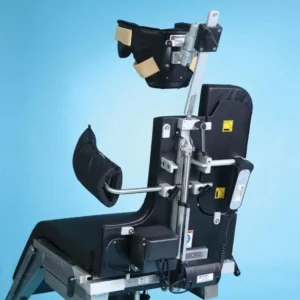
The beach chair position in shoulder surgery places the patient in a semi-upright seated posture that improves visualization of the glenohumeral joint, rotator cuff, and surrounding anatomy. When properly stabilized with surgical positioning equipment, this configuration enhances arthroscopic access, supports ergonomic instrument angles, and helps maintain physiologic stability throughout the procedure. Proper positioning directly affects visualization quality, instrument trajectory, and overall surgical efficiency.
- Improves visualization of the glenoid, rotator cuff, and superior labrum.
- Uses gravity to help distract the humeral head and expand the subacromial space.
- Supports more ergonomic surgeon positioning and instrument control.
- Requires stable head, torso, and pelvic support to prevent alignment drift.
- Relies on secure accessory fixation and radiolucent equipment for imaging access.
What Is the Beach Chair Position in Shoulder Surgery?
The beach chair position is a surgical setup in which the patient sits in a semi-upright posture during shoulder procedures. The torso is elevated between roughly 30 and 90 degrees, the hips are flexed, and the knees are slightly bent while the head and cervical spine remain in neutral alignment.
This position mimics a natural seated posture and allows surgeons improved access to the anterior, superior, and posterior compartments of the shoulder joint.
Why the Beach Chair Position Improves Surgical Visualization
Surgical visualization depends heavily on anatomical orientation and joint access. Elevating the torso changes the biomechanical relationship between the scapula, humerus, thoracic spine, and pelvis.
These biomechanical changes can improve access to key structures while reducing the need for aggressive traction or repositioning.
Primary visualization advantages
- Improved access to the rotator cuff footprint
- Clearer visualization of the superior labrum
- Better anchor placement along the glenoid rim
- More natural arthroscopic triangulation
These benefits depend on stable patient positioning and secure fixation of positioning accessories.
Scapulothoracic Mechanics and Shoulder Exposure
When patients are positioned supine, the scapula is compressed against the operating table. This compression can restrict scapular movement and alter the orientation of the glenoid.
In the beach chair position, the scapula rests more naturally along the thoracic wall. A properly contoured backrest supports the thorax while allowing natural scapular motion.
This improved alignment helps surgeons visualize and access the joint with greater consistency.
Biomechanical benefits include
- Improved glenoid orientation
- Enhanced rotator cuff exposure
- More consistent arthroscopic portal angles
- Improved camera stability
Gravity-Assisted Glenohumeral Joint Mechanics
One of the primary biomechanical advantages of the beach chair position is gravity-assisted humeral head positioning. When the torso is elevated, gravity gently pulls the humerus downward.
This natural distraction can increase subacromial working space and reduce reliance on mechanical traction systems.
Benefits of gravity-assisted joint positioning
- Expanded subacromial space
- Improved visualization of cuff pathology
- Reduced traction-related nerve strain
- More stable arthroscopic fluid management
Stable accessory mounting is essential to maintain these biomechanical advantages. Secure fixation systems such as OR table clamps help maintain consistent patient alignment throughout the procedure.
Cervical Spine Alignment and Neurologic Protection
The semi-upright position increases the importance of proper cervical spine support. The head and neck must remain in neutral alignment throughout the procedure.
Excessive flexion, extension, or rotation can increase strain on cervical structures and potentially affect vascular or neurologic function.
Effective head positioning systems should
- Maintain neutral cervical alignment
- Allow precise micro-adjustment
- Distribute pressure evenly
- Prevent slippage during surgery
Stable multi-joint positioning devices help maintain reproducible alignment throughout the case.
Pelvic Stabilization and Whole-Body Alignment
Although shoulder surgery focuses on the upper extremity, lower body stability plays a major role in maintaining overall alignment.
The pelvis acts as the base of the kinetic chain. If pelvic stabilization fails, upper torso alignment can shift and compromise visualization.
Key pelvic stabilization goals
- Neutral pelvic tilt
- Even weight distribution
- Prevention of sacral pressure concentration
- Controlled hip flexion without lumbar strain
Proper leg supports and restraint systems prevent patient sliding and help maintain consistent positioning throughout long procedures.
Instrument Trajectory and Surgeon Ergonomics
The beach chair position improves instrument trajectory by allowing surgeons to operate in a more natural upright posture. This orientation often reduces the need for excessive shoulder abduction or awkward arm positioning.
Improved ergonomics can enhance surgeon precision and reduce fatigue during longer procedures.
Ergonomic advantages include
- Improved line-of-sight to the operative field
- More natural instrument angles
- Reduced surgeon shoulder strain
- Improved control during anchor placement
Positioning stability is critical to preserve these ergonomic advantages. Accessories secured with devices such as the INFINITY Clamp help prevent equipment drift that could alter instrument angles.
Imaging Access in the Beach Chair Position
Many shoulder procedures require fluoroscopic imaging. The beach chair position can improve imaging access by elevating the torso and allowing more flexible C-arm positioning.
Imaging advantages
- Improved anterior-to-posterior imaging access
- Reduced obstruction from table components
- Clear visualization during fracture reduction
- Accurate anchor placement confirmation
Radiolucent positioning components help preserve these imaging pathways. For example, a radiolucent armboard can support the limb while maintaining clear imaging fields.
Potential Risks Associated With the Beach Chair Position
Although the beach chair setup offers many benefits, improper positioning can introduce complications.
Potential risks include
- Cerebral hypoperfusion during hypotension
- Peripheral nerve compression
- Pressure injuries
- Accessory drift during long procedures
These risks are reduced when positioning systems distribute pressure evenly and maintain stable alignment throughout the procedure.
Experience From Operating Room Practice
In many operating rooms, visualization problems during shoulder surgery are not caused by anatomy alone. They often stem from small positioning inconsistencies.
Examples include clamps that shift during imaging, torso supports that compress the scapula, or headrests that gradually lose alignment.
Reliable positioning systems minimize these issues by providing consistent fixation, intuitive adjustments, and reproducible setup.
Frequently Asked Questions
Why do surgeons use the beach chair position for shoulder surgery?
The beach chair position improves visualization of the shoulder joint while allowing surgeons to operate in a more natural upright posture. It also uses gravity to assist humeral head positioning, which can expand the working space inside the shoulder during arthroscopic procedures.
Is the beach chair position safer than lateral decubitus positioning?
Both positions can be safe when executed correctly. The beach chair setup may reduce traction-related nerve strain because it relies more on gravity for joint distraction. However, careful monitoring of blood pressure and head positioning is important to maintain proper cerebral perfusion.
How does positioning affect arthroscopic visualization?
Patient positioning determines joint orientation, working space, and instrument angles. Stable positioning allows consistent arthroscopic triangulation and improves visualization of structures such as the rotator cuff, labrum, and glenoid.
What equipment is required for the beach chair position?
The setup typically includes a surgical beach chair system, secure rail clamps, head and cervical supports, torso stabilization pads, leg supports, and radiolucent accessories that allow imaging access during the procedure.
Why is pelvic stabilization important during shoulder surgery?
The pelvis forms the base of the body during beach chair positioning. If the pelvis shifts or slides, it can change upper body alignment and reduce visualization stability. Proper pelvic support helps maintain consistent positioning throughout the procedure.
Bottom Line
The beach chair position is a biomechanically strategic setup that enhances surgical visualization, improves instrument access, and supports ergonomic workflow in shoulder surgery. Stable head alignment, secure pelvic support, and properly mounted positioning accessories are essential to maintaining these advantages.
Facilities evaluating advanced positioning systems for shoulder procedures may benefit from reviewing dedicated solutions such as surgical beach chair positioning systems, which are engineered to provide stability, imaging access, and ergonomic support throughout modern shoulder surgery.
